
 Get Android
Recording Your English: The Most Effective Ways to Hear Yourself for Speech Improvement
Here's how to use recordings of your own English speech so that you can maximize your feedback and track real improvements in your English accent!
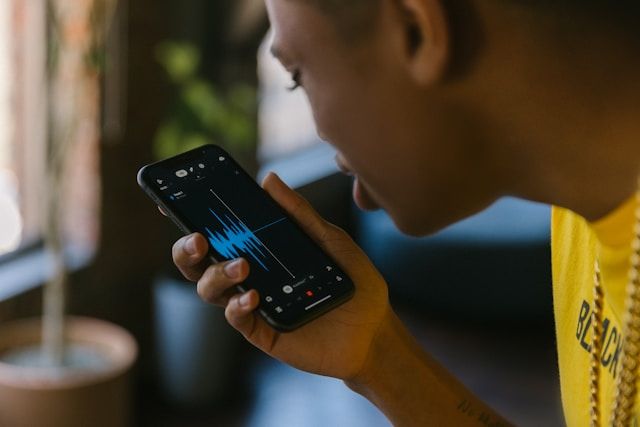
Accent training is different from other learning patterns, because you have to really listen to what you’re saying and how you’re saying it. It’s hard to hear yourself in the moment, so making an audio recording to listen back to usually makes sense.
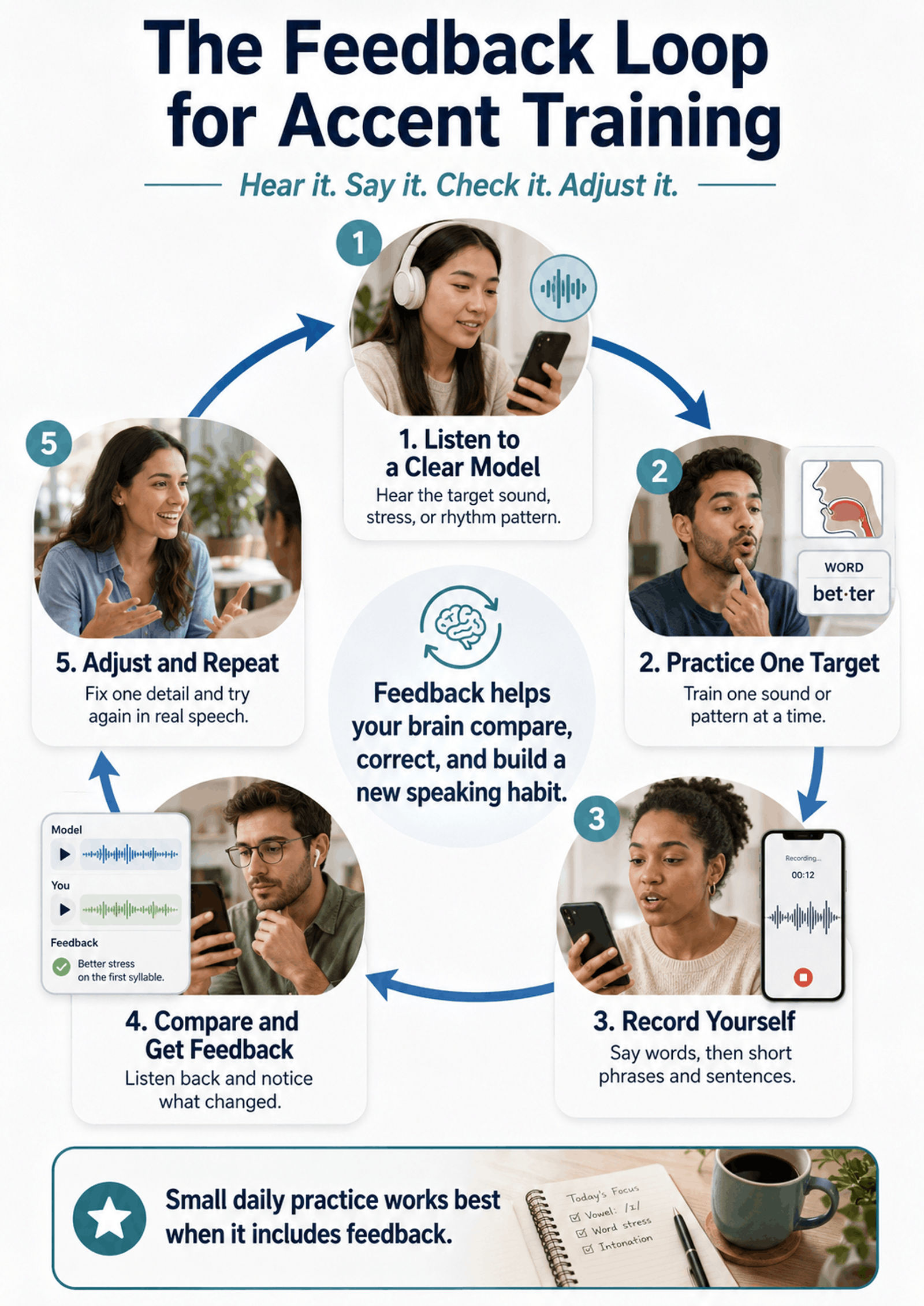
Of course, recording your speech is the easy and straightforward part of the process. After that, you’ve got to learn how to listen carefully to your own speech, identify areas of improvement, plan the next steps, and then implement the changes before recording again. This whole process is called the feedback loop, and in this version, you’re the one giving the feedback!
Here are some of the best ways to make the most of recording yourself to improve English speech and pronunciation.
Different Listening for Different Goals
First, you need to define your speaking goals so that you can listen back to your recordings with the right approach. For example, if you’re trying to improve your fluency and vocabulary, you’ll probably be recording longer samples and listening for the flow of ideas and variety of words.
If you’re practicing for phoneme-level pronunciation, on the other hand, you’re going to be recording in shorter bursts. Then, you’ll compare these short recordings with a native-like source so that you can identify any differences in the individual sounds.
Compare with a Trusted Source
Once you have your recording made, it’s time to compare it to some examples of native English speech. Make sure that you’re finding examples from a trusted source. For long-form speaking, you can listen to English instruction videos or podcasts; content that directly discusses the topics you’ve recorded about can give you targeted vocabulary and pronunciation examples.
For shorter recordings for word-by-word or phrase-by-phrase pronunciation practice, an online dictionary with audio pronunciations is the perfect place to start. Listen carefully to the example first, and then play your own recording. It usually helps to choose one or two things to listen for at a time. You might focus on the vowel sound, the final consonant, word stress, or the rhythm of a whole phrase.
Then, switch back and forth between the example and your recording. The differences often become much easier to hear when the two versions are close together. If you’re working on one difficult sound, try the same process with several words that contain that sound.
Be Honest with Yourself -- Feedback Should Be Clear
When you listen to yourself speaking English, give yourself feedback that you can actually use. “My pronunciation sounds bad” doesn’t give you anywhere to go. “My /θ/ sounds too close to /s/ in the word ‘think’” gives you a specific target for your next recording.
This kind of self-assessment takes some practice. Research on second-language pronunciation has found that even advanced learners can miss some of their own pronunciation problems. In one study, learners identified only around half of the sounds that outside raters considered inaccurate.
That’s another reason why comparing your English speech recording with a trusted model helps. Your own ear gives you useful information, while the comparison gives you a clearer reference point.
Try to finish each listening session with one specific piece of feedback:
Record yourself saying the word, phrase, or passage.
Listen to your recording once without stopping.
Compare it with your reference recording.
Choose one pronunciation feature to change.
Record the same material again.
Listen for that specific change.
That gives you a complete pronunciation feedback loop. You produce the speech, listen to it, identify a target, make an adjustment, and produce it again.
Track Your Progress Over a Longer Time
You’ll probably hear some differences between your first recording and your second one, but the more useful comparison happens over a longer period.
Keep some of your English speech recordings and return to them after a few weeks. You could record the same 30-second passage once every week, for example. You can also save recordings of a few words that contain sounds you’re actively practicing.
Try to keep the recording conditions similar. Use the same passage, speak at roughly the same speed, and record in a similar environment. This makes it easier to compare like with like.
You might notice that a vowel has become clearer, your final consonants sound stronger, or your sentence stress feels more natural. You may also hear a pronunciation problem that you couldn’t hear three weeks earlier. That’s useful progress too. Your ability to hear differences in English speech develops alongside your ability to produce them.
Research on pronunciation feedback also suggests that listening becomes more useful when learners have clear corrective information to work with. In one study, learners listened to their own recordings and model pronunciations, while another group received individual corrective feedback as part of the same process. The study found advantages from adding specific feedback to the listening process.
So, keep your old recordings. They give you a much better picture of pronunciation improvement than your memory of how you sounded a month ago.
How Syranto Can Help Improve Your Feedback Loop
The tricky part of recording yourself for English pronunciation practice is knowing what to listen for. You might hear that something sounds different without knowing exactly which sound, stress pattern, or speech feature is causing the difference.
Syranto gives you another source of feedback within the same basic loop. You produce English speech, receive feedback on specific areas of your pronunciation, practice those areas, and try again.
This works especially well alongside your own recordings. You can use longer recordings to listen for overall fluency, rhythm, clarity, and speaking habits. Then, you can use targeted pronunciation feedback to work more closely on individual sounds and speech features.
Over time, that combination in the English accent feedback loop also helps train your ear. Once you know that a particular vowel, consonant, or stress pattern needs attention, you can start listening for it in your own recordings. The feedback gives you a target, and the recording lets you hear what happens when you try to change it.
That’s where recording yourself becomes much more useful than simply saving audio files on your phone. Each recording becomes part of a process: listen, compare, identify, practice, and record again.
FAQ: Recording Yourself to Improve English Pronunciation
Does recording yourself speaking English improve pronunciation?
Recording yourself gives you the chance to hear your speech after you’ve finished producing it. This makes it easier to focus on pronunciation, word stress, rhythm, fluency, and individual sounds. The biggest benefit comes from listening with a clear goal and using what you hear to guide your next round of practice.
What should I listen for when I record myself speaking English?
Choose a small number of features based on your current goal. For pronunciation practice, you might listen for vowels, consonants, word stress, final sounds, or connected speech. For fluency practice, you can pay more attention to pauses, rhythm, repetition, and the overall flow of your speech.
How often should I record myself for pronunciation practice?
Short, regular recordings give you plenty of material to work with. You can make quick recordings during individual practice sessions and save a longer sample every week or two to track your English pronunciation progress over time.
Should I compare my pronunciation with native English speech?
A clear reference recording can help you hear differences in sounds, stress, rhythm, and timing. Choose a reliable source and, for accent-specific practice, use a speaker who matches the English accent you’re working toward. Then compare one feature at a time so that you have a clear target for your next recording.
Let Syranto complete the loop with personalized, real-time feedback that you can apply to improve your English accent.
Shape your accent, we guide the way.
Reading helps you understand. Practice helps you change how you sound.
Start practicing →