
 Get Android
Say It So They Stay: Pronunciation for Customer-Facing Roles That Builds Trust Fast
Here's everything you need to know about improving your English for customer service roles across several industries, plus how to avoid the most common pronunciation errors.
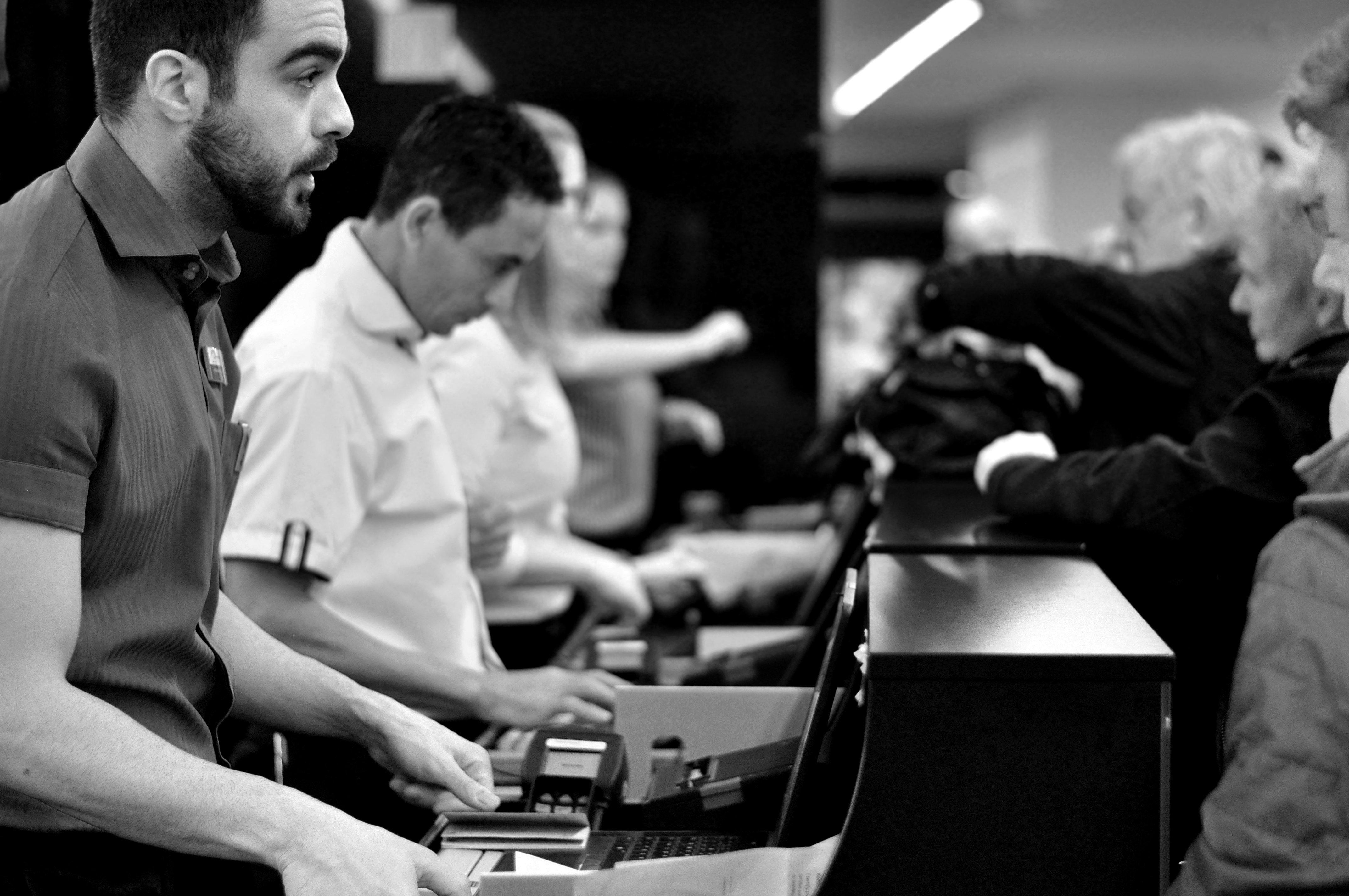
For customer service speaking, the goal is clear speech, not a native accent. Customers do not need perfect English: they need low-friction English from you. They need to hear the message the first time, trust the speaker, and know what to do next.
What Matters Most in Customer-Facing Pronunciation?
Pronunciation for customer-facing roles means speaking so customers can understand key information quickly and easily. That includes names, numbers, dates, prices, addresses, product details, policy terms, and next steps.
Strong customer-facing pronunciation comes from five main skills: clear key words, good word stress, controlled speech rate, sentence stress, and repair phrases. These skills help service workers sound calm, capable, and easy to understand in real conversations.
Customers Don’t Need Perfect English. They Need Low-Friction English.
Customer-facing speech has a different job from casual speech. A friendly conversation can survive mistakes, pauses, repeats, and guesses. A customer interaction or phone call in English often cannot.
A customer may call from a noisy street. A hotel guest may feel tired after a long flight. A patient may feel nervous. A shopper may feel annoyed about a return. A client may have ten minutes before another meeting. The person listening may already carry stress into the conversation.
That pressure changes the speaker’s job. Clear professional English pronunciation becomes part of the service experience. It helps the customer relax because the information feels easier to follow.
One small pronunciation problem can break the chain:
“Fifteen” can sound like “fifty.”
“Tuesday” can sound like “Thursday.”
“Card” can sound like “cart.”
“Can’t” can sound like “can.”
The customer may ask for repetition, or worse, they may pretend to understand and leave with the wrong information.
This does not mean customer-facing workers need accent erasure! Your accent is your identity, history, place, and voice. But clarity is your best strategy.
A person can keep their accent and still become much easier to understand. The best goal is not “sound American” or “sound British.” The best goal is “make the customer work less hard.”
The Customer-Facing Clarity Map: Six Speech Skills That Change the Interaction
Clear customer-facing speech has several moving parts. Some matter more than others.
1. Keyword Pronunciation
Every job has customer-critical words. These are the words customers must catch for the conversation to succeed.
A call center agent may say “verification,” “billing,” “transfer,” “subscription,” and “confirmation” every day.
A hotel worker may use “reservation,” “checkout,” “deposit,” “upgrade,” and “available.”
A healthcare receptionist may repeat “appointment,” “insurance,” “prescription,” “referral,” and “copay.”
A retail employee may say “receipt,” “exchange,” “warranty,” “discount,” and “delivery.”
These words deserve extra practice because they carry the transaction.
2. Word Stress
Listeners rely heavily on word stress in English. A word may contain the right sounds, yet still feel hard to understand if the stress falls in the wrong place.
Look at these pairs:
“REfund” is a noun.
“reFUND” is a verb.
“PREsent” is a noun or adjective.
“preSENT” is a verb.
“CONtract” is a noun.
“conTRACT” is a verb.
A simple rule helps: make the stressed syllable longer, louder, and clearer. Do not punch every syllable. English clarity often comes from contrast, not equal force.
3. Sentence Stress
Word stress helps people hear a word. Sentence stress helps people hear the message.
Compare these sentences:
“Your APPOINTMENT is on Monday.”
This highlights the event.
“Your appointment is on MONDAY.”
This highlights the day.
“Your appointment is at THREE.”
This highlights the time.
Customer-facing workers can use sentence stress to guide the customer’s attention. The important word should stand out. That might be the price, date, address, next step, or warning.
4. Speech Rate
Many learners hear “speak slowly” as the main advice. That advice can help, but it can also create stiff, robotic speech.
You should use a natural pace for simple parts, then slow down before important details.
Say names in small parts.
Pause after numbers.
Separate dates from times.
Break addresses into chunks.
A strong service sentence may sound like: “Your order will arrive on Friday, June fourteenth. I’ll repeat that: Friday, June fourteenth.”
5. Final Consonants
Final consonants carry a lot of meaning in English. Customer-facing workers can lose clarity when final sounds disappear.
“Card” can become “car.”
“Sent” can become “send.”
“Need” can become “neat.”
“Walk” can sound close to “work.”
“Can’t” can sound like “can.”
The fix does not require exaggerated speech. The speaker can lightly touch the final sound and then pause.
6. Repair Phrases
Even clear speakers get misunderstood. Customer-facing workers need phrases that help them repeat information without sounding irritated or embarrassed. These phrases also make the speaker sound professional.
Useful repair phrases include:
“Let me say that another way.”
“I’ll spell that for you.”
The number is fifteen, one-five.”
“I’ll repeat the address in small parts.”
“Let me slow that down.”
“Let me confirm the last detail.”
Pronunciation Problems That Matter Most in Customer Service
Some pronunciation problems cause more customer friction than others. A rare sound in a rare word may never affect the job. A number mistake can create a billing problem in seconds.
Numbers, Dates, and Times
Numbers deserve special attention because they often carry money, time, addresses, order numbers, and account details.
“Thirteen” and “thirty” can cause trouble. So can “fifteen” and “fifty,” “eighteen” and “eighty,” or “sixteen” and “sixty.”
Stress helps. The “teen” numbers usually carry stress near the end: thirTEEN, fifTEEN, eighTEEN. The “ty” numbers usually carry stress at the beginning: THIRty, FIFty, EIGHty.
You can also use a backup strategy:
“That is fifteen dollars, one-five.”
“The order number ends in sixty, six-zero.”
“Your appointment is on Thursday, T-H-U-R-S-day.”
Dates and times need the same care. A pause can prevent confusion:
“Tuesday / March fifth / at two thirty.”
Names and Spelling
Names matter because they feel personal. A customer may forgive a policy delay more easily than a careless mistake with their name.
English letters can also sound similar, especially on the phone: B and V, M and N, P and B, E and I, A and R.
Customer-facing workers can use spelling support:
“B as in Bravo.”
“M as in Mike.”
“N as in Nancy.”
“V as in Victor.”
“Can” and “Can’t”
“Can” and “can’t” create one of the most common customer-service risks. The final /t/ in “can’t” may disappear, especially before another consonant. The customer may hear the opposite message.
A speaker can make “can’t” clearer with stress and a short pause:
“I CAN’T / process that today.”
A safer option uses a backup phrase:
“I’m not able to process that today.”
“That option is not available today.”
“The system does not allow that change.”
The backup phrase removes doubt. This matters when the message affects money, access, deadlines, or policy.
Polite Phrases Under Pressure
Pronunciation also affects tone. A phrase can use correct words and still sound cold, rushed, or annoyed:
“I understand” needs a steady, warm fall in tone.
“I’m sorry about that” needs a slower pace and real stress on “sorry.”
“Could you hold for a moment?” should rise gently, not sharply.
“Let me check that for you” should sound helpful, not defensive.
Practice Scripts: Clear Pronunciation in Real Customer Moments
Practice should sound like the real job. Random sentences have limited value. Real scripts build muscle memory for customer pressure. Listen to these examples, then repeat and practice.
Confirming Information
“Let me confirm your email address.”
“I’ll repeat the phone number back to you.”
“Could you please spell your last name?”
“The account number ends in four-seven-two.”
Giving a Price
“The total is fifteen dollars and ninety cents.”
“That is fifty dollars before tax.”
“The delivery fee is eight dollars.”
“The discount takes twenty percent off the total.”
Explaining a Delay
“Your order is delayed by two business days.”
“The item will arrive on Friday.”
“The system is updating now.”
“I’ll check the tracking number for you.”
Handling a Complaint
“I understand why that is frustrating.”
“I’m sorry about the delay.”
“Let me check the account.”
“I’ll explain the next step clearly.”
Closing the Conversation
“Before we finish, I’ll repeat the next step.”
“You will receive an email confirmation today.”
“Your appointment is confirmed for Monday at three.”
“Thank you for calling. We’re here if you need more help.”
These scripts work best when you mark the key words first. Then you can practice stress, pauses, and final consonants inside the full sentence.
Main Takeaway: Clearer Speech Makes Service Feel Easier
Customer-facing pronunciation is all about making the customer’s job easier. Clear speech lowers friction, reduces repeats, protects important details, and helps workers sound more confident during real service moments.
The best practice starts with the words that matter most at work. Then, add stress, rhythm, pauses, final consonants, and repair phrases. Small changes can make a big difference when the customer needs fast, accurate information.
FAQ: Pronunciation for Customer-Facing Roles
Do I need a native accent to work in customer service?
No. You need clear, confident, understandable speech. A native accent is not the right target for most learners. Customers need to understand your message, trust your tone, and know the next step.
What pronunciation skills matter most for customer-facing jobs?
The most useful skills are key-word pronunciation, number clarity, final consonants, word stress, sentence stress, rhythm, and repair phrases. These skills help customers catch important details faster.
How can I practice pronunciation for call center work?
Use real call scripts. Practice account numbers, names, product terms, billing words, and support phrases. Record short service sentences and listen for speed, stress, and final consonants.
How can I sound clearer without speaking too slowly?
Pause before and after important details. Break long information into smaller chunks. Stress the words the customer must remember. Clear speech comes from structure, not slow motion.
Is accent reduction the same as pronunciation training?
No. Accent reduction often suggests a native-speaker target. Strong pronunciation training focuses on intelligibility, comprehensibility, and listener understanding.
What should managers focus on when training customer-facing teams?
Managers should focus on real job words, clear metrics, repair phrases, and fair communication goals. Training should help employees make customer conversations smoother without treating accent as a flaw.
What is the fastest way to improve pronunciation for customer-facing work?
Start with the words and phrases your job uses every day. Practice numbers, names, dates, prices, final consonants, and high-frequency service scripts. These areas create the fastest practical gains.
Syranto helps English learners practice the sounds, words, and speech patterns that matter in real conversations, so customer-facing English feels clearer, calmer, and more ready for work.
Shape your accent, we guide the way.
Reading helps you understand. Practice helps you change how you sound.
Start practicing →