
 Get Android
Neuroplasticity and English Pronunciation: How Your Brain Changes Through Accent Training
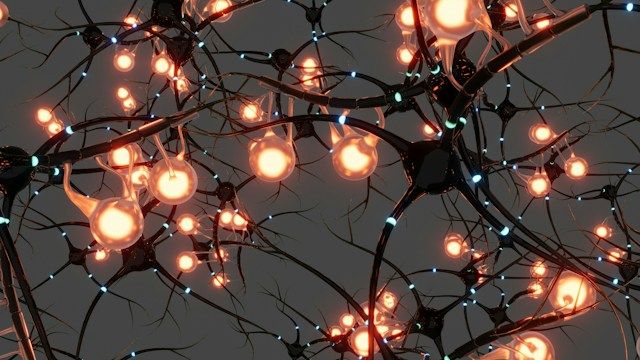
Let's explore the links between the neural connections in your brain, how they're formed, and how they grow and change as you practice your English accent.
You’ve probably heard that children are especially good at picking up accents.
That’s true in plenty of ways. Their brains are developing rapidly, and they spend enormous amounts of time listening to and producing speech.
Your adult brain still has something very useful going for it, though: neuroplasticity.
Neuroplasticity is your brain’s ability to change in response to experience. Every time you practice hearing a difficult English sound, try a new mouth movement, compare your pronunciation with a target, and make a correction, you give your brain information it can learn from.
That makes neuroplasticity one of the most important ideas behind long-term English pronunciation and accent training.
Quick Answer: How Does Neuroplasticity Help English Pronunciation?
Neuroplasticity allows your brain to adapt as you learn new speech sounds and pronunciation patterns. Focused listening, active pronunciation practice, repetition, and feedback can change how the brain processes unfamiliar speech. Over time, these changes can make English sounds easier to recognize, produce, and use automatically during conversation.
What Is Neuroplasticity?
Your brain changes with experience.
Researchers use the word neuroplasticity to describe changes in the way neural systems organize and function as you learn.
Language learning provides a good example.
A 2026 systematic review examined neuroimaging research on adults learning second languages. Across the studies, researchers found evidence of both functional and structural changes related to language learning, including changes within networks involved in language processing and cognitive control.
The exact changes differed across learners, ages, training programs, and brain-imaging methods.
The larger point is much simpler:
Your adult brain remains responsive to language experience.
Bringing It Back to English Accent Training
Your existing accent comes from experience, too.
For years, your brain has learned which speech sounds matter in your first language. It has become extremely efficient at recognizing those categories and connecting them with familiar movements of your tongue, lips, jaw, and voice.
English may ask you to divide sounds differently.
A Chinese speaker learning English, for example, may need to develop a stronger perceptual distinction between English /r/ and /l/. Another learner may need to hear two English vowels as separate categories even though their first language treats them as versions of one sound.
At first, your brain naturally interprets new speech through the sound system it already knows.
Accent training gives it new information.
Your Brain Can Learn New Speech Categories
Some of the clearest evidence comes from phonetic training studies.
Researchers have trained adult learners to hear speech contrasts that are difficult because those contrasts do not function in the same way in their first language.
One classic study trained Japanese adults on the English /r/ and /l/ contrast for one month. After feedback-based listening practice, learners improved their ability to identify the sounds.
Brain imaging also showed changes in networks involved in auditory processing, speech planning, motor functions, and auditory-articulatory connections.
Another study trained English-speaking adults to distinguish Hindi speakers' dental-retroflex contrast. Five training sessions improved their identification of the unfamiliar sounds, while brain imaging showed changes in the way speech-related regions handled the contrast.
That is neuroplasticity in action.
Repeated experience changes the way an unfamiliar sound is processed.
Pronunciation Training Changes What You Hear
Listening deserves a major place in accent training because your brain needs a clear target before your mouth can reliably reproduce it.
Imagine that two English vowels currently sound almost identical to you.
At first, your brain may place both inside the nearest sound category from your first language.
You start noticing the vowel quality and duration more consistently, and over time, your perceptual system becomes more sensitive to the contrast.
In fact, a recent meta-analysis covering 65 phonetic-training studies and 2,793 second-language learners found a large overall positive effect from phonetic training. Perception-focused training produced especially strong results.
Your Brain Also Connects Sounds With Movements
Speech perception and speech production work closely together.
When you hear an English sound, you also need a movement pattern capable of producing it.
You can see it in:
tongue position for /r/;
lip and teeth contact for /v/;
tongue placement for /θ/;
jaw opening for /æ/;
timing changes for English stress.
Research on difficult speech contrasts suggests that learning involves networks that connect auditory information with speech movement. The /r/ and /l/ study, for example, found changes across areas related to both auditory processing and articulatory planning.
This helps explain why pronunciation practice needs both listening and speaking.
Your brain learns the sound, and then your speech system learns how to reach it.
Neuroplasticity Can Start Surprisingly Quickly
Neural adaptation can begin during relatively short periods of training.
A 2026 study trained adult Finnish speakers to identify Mandarin lexical tones for one hour a day across four days.
Learners improved their discrimination and categorization of the tones. Their improvement also transferred to new speakers and different speech materials.
The researchers recorded changes in brain responses as well, including responses associated with automatic detection of sound differences.
Mandarin tone learning differs from English accent production, of course. The study still gives us something useful: adult speech systems can respond to focused phonetic experience over a surprisingly short period.
Stable accent change requires much more than four days.
The learning process itself can start quickly.
Common Problems That Slow Pronunciation Learning
Neuroplasticity responds to what you repeatedly do.
That makes practice quality important.
Practice Problem | What Happens | Better Training Choice |
You listen passively | You receive sound input with little focused discrimination | Compare specific sounds |
You repeat without feedback | The same production pattern may continue | Check each short practice set |
You practice many features at once | Attention gets divided across too many targets | Focus on one feature |
You only practice isolated words | The new pattern stays tied to a narrow context | Move into phrases and sentences |
You practice once and leave the sound for weeks | Access to the new pattern gets fewer chances to strengthen | Return to the target regularly |
You only practice slowly | Control improves at one speed | Gradually increase speech speed |
The goal is repeated, meaningful experience with the English pattern you want to develop.
How to Use Neuroplasticity in English Pronunciation Practice
You can build your practice around a simple learning cycle.
1. Choose one small pronunciation target
Pick one vowel, consonant, stress pattern, or rhythm feature.
Your brain gets a clearer learning signal when the target is specific.
2. Train your ear first
Listen to several examples.
Compare the target with the pronunciation pattern you commonly use.
Hear the difference before you spend a long time producing it.
3. Produce the sound slowly
Give your speech system time to find the correct movement.
Pay attention to your tongue, lips, jaw, airflow, or voicing.
4. Get clear feedback
Record yourself, work with a teacher, compare with a trusted source, or use targeted pronunciation feedback.
Identify one difference.
5. Adjust immediately
Change one physical or acoustic feature.
Then produce the sound again.
6. Add different contexts
Move from:
sound → word → phrase → sentence → spontaneous speech
This gives your brain experience using the new pattern under different conditions.
7. Return to the target regularly
Practice the feature across several sessions.
Repeated access strengthens your ability to find the new speech pattern again.
Neuroplasticity Continues Into Adulthood
Age affects language learning.
Children and adults learn under very different biological and environmental conditions, and early language experience has a strong influence on accent development.
Adult learning still produces measurable change.
The 2026 neuroimaging review found evidence of learning-related functional reorganization across adulthood. Younger adults also showed structural changes in several studies, while older adults showed particularly consistent evidence of functional adaptation.
So your age gives your pronunciation training a particular starting point.
Your experience gives your brain its next input.
FAQ: Neuroplasticity and English Pronunciation
Can adults change their English pronunciation?
Yes. Research on second-language phonetic training shows that adults can improve their perception and production of unfamiliar speech features. Adult language learning is also associated with measurable functional changes in the brain.
Does neuroplasticity mean I can change my accent?
Neuroplasticity provides the biological capacity for learning and adaptation. Your final pronunciation outcome also depends on factors such as your starting point, practice quality, listening ability, feedback, training intensity, and amount of experience with English.
How does the brain learn a new English sound?
The brain gradually becomes more sensitive to the acoustic features that distinguish the sound. It also develops stronger connections between what you hear and the articulatory movements needed to produce it.
Is listening or speaking more important for neuroplasticity?
Both contribute to pronunciation learning. Listening helps establish and sharpen the sound target. Speaking gives your motor system practice producing it. Research on phonetic training supports a strong role for perceptual learning, while production practice develops control of the spoken form.
How long does neuroplasticity take during pronunciation training?
There is no single timeline. Some phonetic-learning studies have measured behavioral and neural changes after only a few days of concentrated training, while reliable accent development grows through continued practice across longer periods.
Your pronunciation today reflects years of speech experience.
Every focused English practice session adds new experience to that system.
That’s why accent training works best as a process: hear clearly, produce actively, get useful feedback, adjust, and come back to the sound again.
Your brain keeps learning from what you give it.
Get started today with the Syranto app, and start forming new habits and neural pathways for your English accent!
Shape your accent, we guide the way.
Reading helps you understand. Practice helps you change how you sound.
Start practicing →